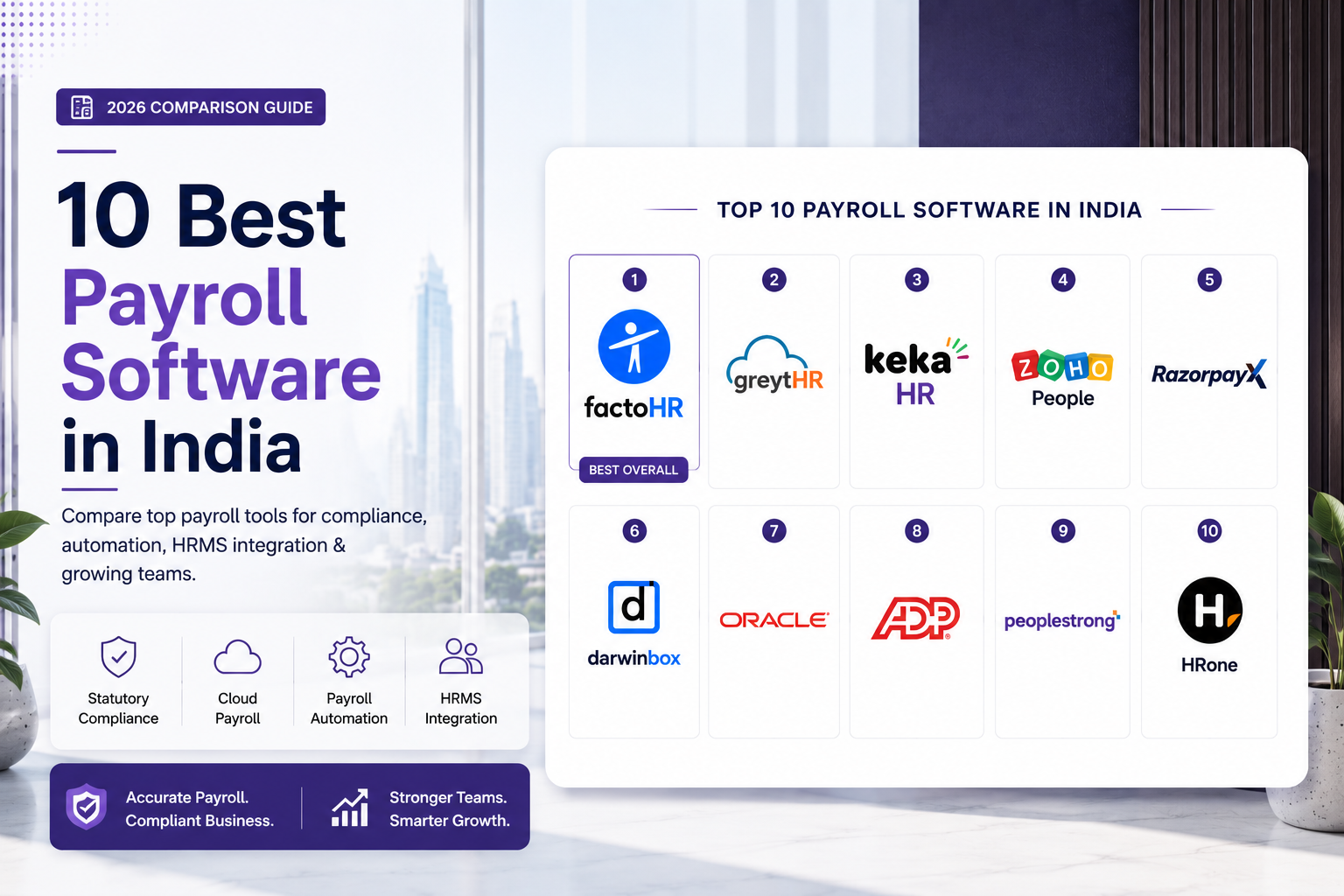
Every payroll vendor in India claims the same things: automated PF, ESI, TDS, and Professional Tax. That makes shortlisting hard, and sitting through ten sales demos is not a real option for a busy HR or finance team. So we wrote this guide to do the filtering for you. We compared 12 payroll tools on verified pricing, real G2 and Gartner ratings, statutory depth, and best-fit team size, all checked from official sources.
The short answer: factoHR is our top pick for most SMBs, mid-market firms, and manufacturing teams, because it runs payroll straight from attendance data and handles multi-state compliance without manual edits. GreytHR fits small teams on a budget. RazorpayX suits startups. PeopleStrong, Darwinbox, ADP, and Oracle serve large enterprises.
Here is the short version by team size:
- Under 25 employees: GreytHR free plan or Zoho Payroll
- 25 to 250 employees: factoHR, GreytHR, or Pocket HRMS
- 250 to 2,000 employees: factoHR, Keka HR, or HROne
- Above 1,000 employees: PeopleStrong, Darwinbox, ADP India, or Oracle
How We Compared These 12 Payroll Tools
We compared every tool on five factors that matter most for Indian payroll:
- Statutory depth. Does it handle PF, ESI, TDS, PT, and LWF fully?
- Multi-state PT handling. Does it apply the right slab by work location?
- Attendance link. Does payroll pull attendance data directly?
- Pricing clarity. Can you see real prices without a sales call?
- Ease of use. How simple is it for HR teams and employees?
Our inputs: official vendor pricing pages, product documentation, and verified user ratings on G2 and Gartner Peer Insights. The factoHR review reflects daily hands-on use. We did not run live payroll on every competitor. Where a figure needs a fresh check, we say so instead of guessing.
All prices and ratings below are verified from official vendor pages and review platforms. Prices exclude 18% GST unless stated. Always confirm final rates with the vendor.
Comparison Table: 12 Best Payroll Software in India at a Glance
Read this table like a payroll buyer, not a feature list. Best for tells you the team size and type each tool serves. Statutory coverage tells you which Indian salary deductions and filings the tool handles every month, meaning PF, ESI, TDS, Professional Tax, and LWF. Attendance link tells you how attendance data reaches payroll, because a native link removes the biggest source of salary errors. Free plan or trial shows how you can test before paying. User rating is the verified score on G2 or Gartner, and starting price is the verified entry cost, so you can shortlist within budget before booking a single demo.
| # | Software | Best for | Statutory coverage | Attendance link | Free plan or trial | User rating (verified) | Starting price (verified) |
|---|---|---|---|---|---|---|---|
| 1 | factoHR | All company sizes and industries in India | Strong statutory coverage: PF, ESI, TDS, multi-state PT, LWF with managed updates | Native: biometric, GPS, geo-fence | Free guided demo | 4.6 (G2) | Custom quote |
| 2 | GreytHR | Small businesses | Full: PF, ESI, TDS, PT, LWF | Native attendance and leave | Free plan up to 25 employees | 4.4 (G2) | Paid from Rs. 3,495/month |
| 3 | Keka HR | Tech and services mid-market | Full: PF, ESI, TDS, PT | Native, with selfie and geo punches | 7-day free trial | 4.5 (G2) | Rs. 9,999/month (up to 100 employees) |
| 4 | Zoho Payroll | Zoho ecosystem SMBs | Full: PF, ESI, TDS, PT | Via Zoho People | Free plan up to 10 employees | 4.4 (G2, few reviews) | From ~Rs. 40/employee/month |
| 5 | RazorpayX Payroll | Startups | Full: PF, ESI, TDS, PT | Basic, plus integrations | Free starter plan | 4.3 (parent Razorpay on G2); no separate RazorpayX Payroll G2 listing | ~Rs. 100/employee/month |
| 6 | HROne | Multi-state mid-market | Full: PF, ESI, TDS, PT, LWF | Native attendance module | Free demo, pilot on request | 4.8 (G2) | ~Rs. 85/employee/month |
| 7 | Pocket HRMS | Budget SMB teams | Full: PF, ESI, TDS, PT | Native attendance module | Free demo | 89% user satisfaction (independent aggregators, 14+ reviews) | Rs. 2,995/month (up to 50 employees) |
| 8 | Paybooks | SMBs wanting managed payroll | Full: PF, ESI, TDS, PT | Biometric device sync | Free trial + 15th Anniversary offer (up to 6 months free) | 26 verified reviews on G2; 4.7 on SpotSaaS (47 reviews) | Custom quote (no public price list) |
| 9 | PeopleStrong | Large Indian enterprises | Full + Code on Wages readiness | Native inside Alt HCM | No trial, sales-led demo | 4.7 (Gartner) | Custom quote |
| 10 | Darwinbox | Multi-entity enterprises | Full + Code on Wages readiness | Native inside HCM record | No trial, enterprise pilot | 4.4 (G2) | Custom quote |
| 11 | ADP India | MNCs, managed payroll | Full, bureau-managed filings | Via ADP time modules | No trial, sales-led demo | 4.2 (G2) | Custom quote |
| 12 | Oracle Fusion HCM | Global enterprises | Full + global standards | Native inside Fusion HCM | No trial, scoping call | 3.8 (G2) | Enterprise custom quote |
What Does Payroll Software Do in India?
Payroll software calculates salaries, deducts taxes and statutory dues, pays employees, and files government returns. In India, it must handle PF, ESI, TDS, Professional Tax, and Labour Welfare Fund every month, for every state where your team works.
You give the software two things. First, employee master data such as CTC structure, bank account, and joining date. Second, monthly inputs such as attendance, leave, and one-time payouts.
It gives you four things back:
- Net pay for every employee
- Statutory files such as PF ECR, ESI challans, and Form 24Q
- Payslips that employees can download themselves
- Reports that keep you ready for audits and inspections
Good payroll software removes three painful habits. Excel sheets that break every quarter. Manual data transfer between attendance and payroll teams. And the late-night rush before PF and TDS due dates.
Which Statutory Rules Must Indian Payroll Software Handle?
Indian payroll software must handle eight statutory rules: PF, ESI, TDS, Professional Tax, LWF, gratuity, bonus, and the new labour codes. The hardest part is Professional Tax, because each state sets its own slabs and changes them on its own schedule.
Here is what each rule means in plain words:
- Provident Fund (PF): A retirement saving. Both you and the employee contribute every month. The software must create ECR files for EPFO.
- Employee State Insurance (ESI): Health cover for employees under the wage ceiling. Monthly challans go to ESIC.
- TDS on salary: Income tax cut from salary each month under Section 192. The software files Form 24Q and creates Form 16.
- Professional Tax (PT): A state tax. 21 states and union territories levy it as of 2026: Maharashtra, Karnataka, Tamil Nadu, Gujarat, West Bengal, Andhra Pradesh, Telangana, Kerala, Madhya Pradesh, Odisha, Assam, Bihar, Jharkhand, Chhattisgarh, Sikkim, Tripura, Meghalaya, Manipur, Mizoram, Nagaland, and Puducherry. Slabs differ by state. Delhi, Haryana, Punjab, Uttar Pradesh, Uttarakhand, Rajasthan, Himachal Pradesh, and Goa do not levy PT.
- Labour Welfare Fund (LWF): A small state-level deduction, collected in fixed cycles.
- Gratuity: Paid after 5 years of continuous service. Formula: (last drawn salary x 15 x years) / 26.
- Bonus: Governed by the Payment of Bonus Act, with minimum and maximum limits.
- Code on Wages readiness: The new labour codes change how “wages” are defined. This affects PF and gratuity maths.
Reviews of the 12 Best Payroll Software in India (2026)
Each review below covers what the tool does well, verified pricing with a link, its G2 rating, and where it falls short. Read the two or three that match your team size, then shortlist for demos.
1. factoHR
factoHR is an India-first payroll and HRMS platform. Here is the problem it solves. In most companies, attendance sits in one system and payroll in another. Every month, someone exports punch data, fixes it in Excel, and imports it into payroll. Most salary mistakes are born in that one step. factoHR removes the step. Biometric punches, GPS check-ins, and shift data flow straight into salary calculation, with nothing exported and nothing re-typed.
A simple example shows why this matters. Take a retail chain with 120 staff split between Hyderabad and Mumbai. Different PT slabs, different LWF rules, different shift patterns. In factoHR, one payroll run applies Telangana PT to the Hyderabad staff and Maharashtra PT to the Mumbai staff, then creates the PF ECR file, ESI challans, and Form 24Q for everyone together. At year end, it generates Form 16 in bulk.
factoHR serves companies across manufacturing, pharma, BFSI, retail, and IT services. Today, 4,000+ businesses run payroll on it, covering over 2.7 million employees.
Why it made our list: factoHR has the strongest statutory coverage among all the software on this list. One engine handles PF, ESI, TDS, multi-state PT, and LWF together, and rule updates reach you after government notifications without any manual edits.
Best for: Indian businesses of every size and industry, from small teams to large enterprises, including shift-based, factory, and field staff.
Pricing: Custom quote based on employee count and modules. See our pricing page.
G2 rating: 4.6 out of 5 from 165 reviews (verified on G2).
Pros:
- Attendance-driven payroll removes the biggest source of salary errors
- Statutory updates ship as a managed service after government notifications
- Strong mobile self-service app for payslips, tax declarations, and leave
Cons:
- No public price list, so you need a demo call for an exact quote
- Teams under 10 employees may not need this much depth on day one
- Setup speed depends on how clean your existing employee data is
Want to see it with your own data? Book a free 30-minute demo and watch one full payroll run with PF, ESI, TDS, and PT.
2. GreytHR
GreytHR has run Indian payroll for nearly three decades. It offers the most generous free plan on this list. Teams with up to 25 employees can run full payroll, including PF, ESI, PT, and TDS filings, at no cost.
The compliance engine is mature and reliable. It covers all statutory needs, multi-state PT, loans, reimbursements, and full-and-final settlements. It also connects with banks for direct salary transfers.
Why it made our list: One simple reason. It is the only well-known payroll tool that is truly free for up to 25 employees, with real PF, ESI, and TDS filings included. Most free tools stop at payslips. GreytHR actually files.
Best for: Small businesses and teams under 250 employees where price and compliance accuracy matter most.
Pricing: Free up to 25 employees; paid plans from Rs. 3,495 per month for 50 employees. Full details on the GreytHR pricing page.
G2 rating: 4.4 out of 5 from 1,243 reviews (verified on G2).
Pros:
- Free plan with real statutory filings, rare in serious payroll tools
- Battle-tested compliance engine with a large report library
- Direct bank integration for salary payouts
Cons:
- The interface feels dated next to newer platforms
- Fast-growing teams often move out after crossing 250 employees
3. Keka HR
Keka HR is built in Hyderabad and runs payroll for thousands of Indian companies, mostly in tech and services. Its main selling point is the user experience. Payroll runs in guided steps, payslips are clean, and the mobile app gets used because it is genuinely easy.
Payroll, attendance, leave, and performance share one employee record. Salary structures follow Indian CTC conventions, and the system files Form 24Q and creates Form 16.
Why it made our list: Employees actually enjoy using it, and that is rare in payroll software. It also shows its prices openly on its website, while most rivals make you call sales first. A 4.5 rating from over 2,000 G2 reviews backs this up.
Best for: Tech, IT services, and professional services firms with 100 to 2,000 employees.
Pricing: From Rs. 9,999 per month for up to 100 employees, then Rs. 90 per extra employee. Details on the Keka pricing page.
G2 rating: 4.5 out of 5 from over 2,000 reviews (verified on G2).
Pros:
- One of the cleanest interfaces in Indian HR software
- Published rupee pricing, no sales-call mystery
- Strong integration across HR modules
Cons:
- The 100-employee base block makes it costly for teams under 50
- Factory payroll needs like contract labour and shift differentials often need extra setup
4. Zoho Payroll
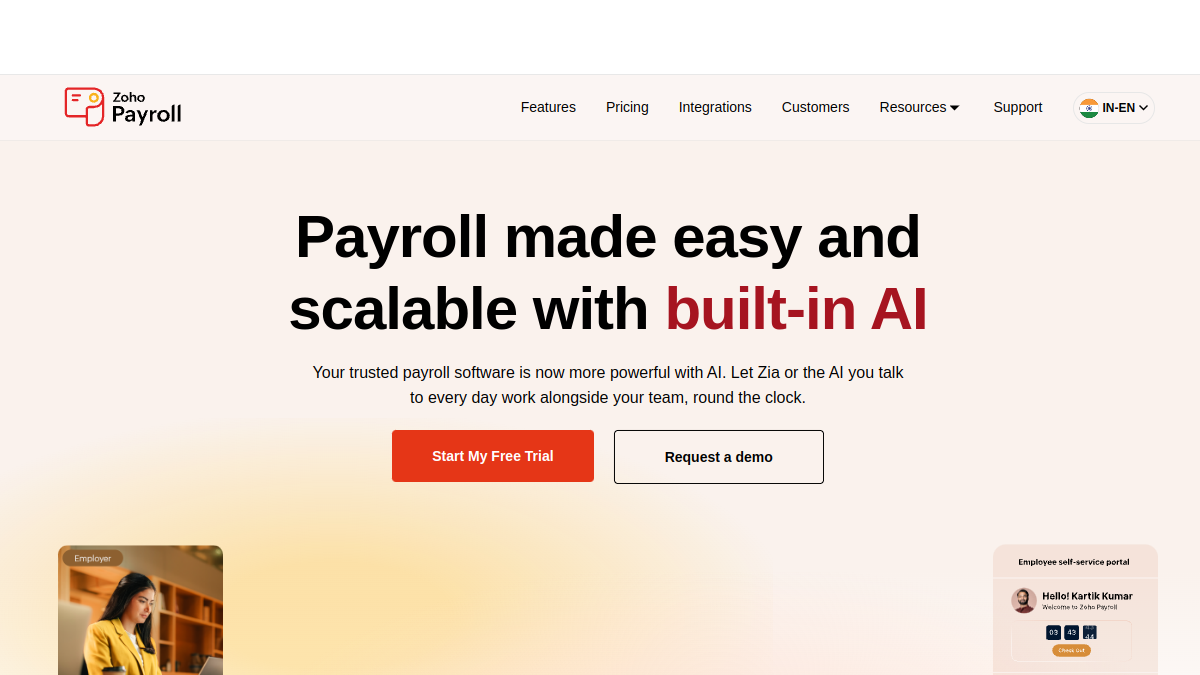
Zoho is an Indian company from Chennai. Zoho Payroll handles salary processing, and it pairs with Zoho People for HR. Together they suit SMBs that already run accounts on Zoho Books.
The real win is the accounting link. Payroll entries post to Zoho Books on their own. Founders who manage their own finances save hours every month. Statutory basics are covered: PF, ESI, PT by state, TDS, and Form 16.
Why it made our list: It is the cheapest serious option in India at about Rs. 40 per employee. And if you already do your accounts on Zoho Books, payroll entries post themselves. For a small business, that combination is hard to beat.
Best for: SMBs with 10 to 500 employees already using Zoho Books or Zoho One.
Pricing: Free for up to 10 employees; paid plans from about Rs. 40 per employee per month. Current rates on the Zoho Payroll pricing page.
G2 rating: 4.4 out of 5, but from only 19 reviews (verified on G2). The small review count means treat this rating with care.
Pros:
- Lowest entry pricing among serious Indian payroll tools
- Automatic accounting entries in Zoho Books
- Quick self-serve setup, usually under two weeks
Cons:
- Complex shift-based payroll support is limited
- Users on review sites flag slow customer support at times
5. RazorpayX Payroll
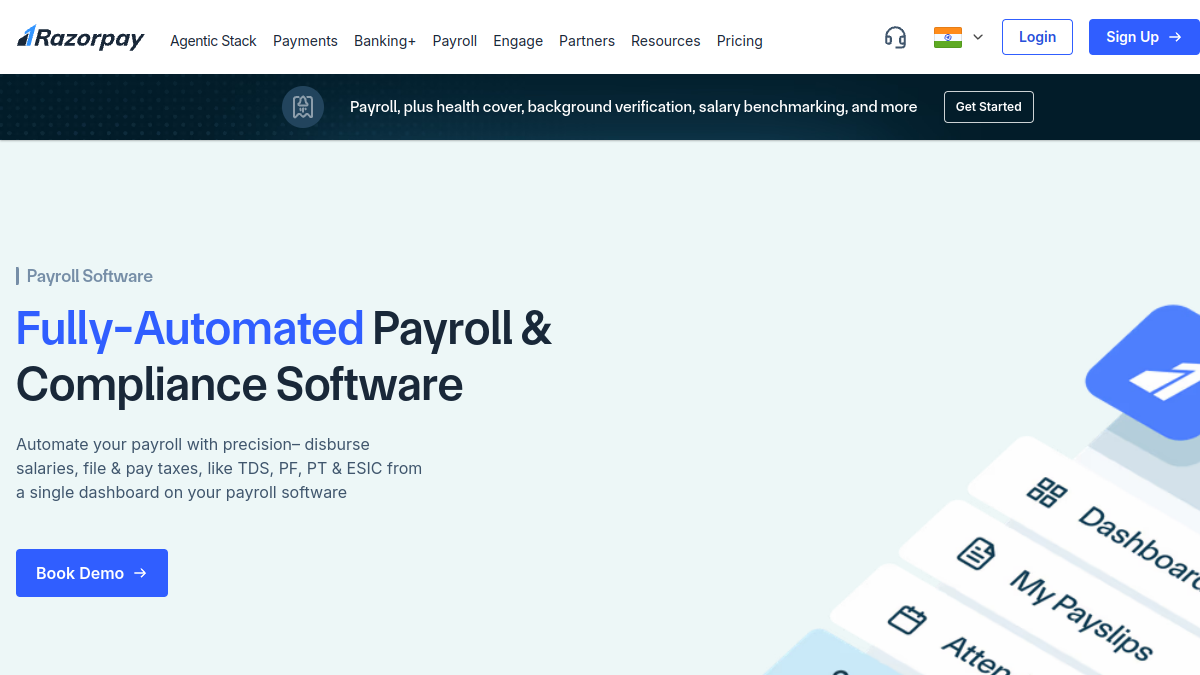
RazorpayX Payroll pairs salary payouts with compliance filings in one flow. You approve payroll, and salaries go out on Razorpay payment rails. PF, ESI, PT, and TDS filings happen in the same workflow.
It also handles contractor payments with the right TDS treatment under Sections 194J and 194C. Most foreign payroll tools miss this. Founders without an HR hire can run clean payroll on their own.
Why it made our list: It does something no other tool here does. It pays salaries and files the returns in one single flow, with no bank file uploads. It also gets contractor TDS right, which most payroll tools quietly skip.
Best for: Startups with 5 to 200 employees, especially existing Razorpay banking customers.
Pricing: About Rs. 100 per employee per month, with fixed plans from Rs. 2,499 per month for 20 employees. Details on the RazorpayX Payroll page.
User rating: 4.3 out of 5 for the parent Razorpay platform on G2 (from 151 verified reviews). RazorpayX Payroll does not yet have its own G2 product listing; ratings on SoftwareSuggest and comparable Indian review sites sit around 4.3 to 4.5.
Pros:
- Payouts and filings in a single flow, no bank file uploads
- Correct contractor TDS handling next to salaried staff
- Live within a week for most teams
Cons:
- Limited depth beyond payroll, HR features are basic
- Most companies outgrow it past 200 to 300 employees
6. HROne
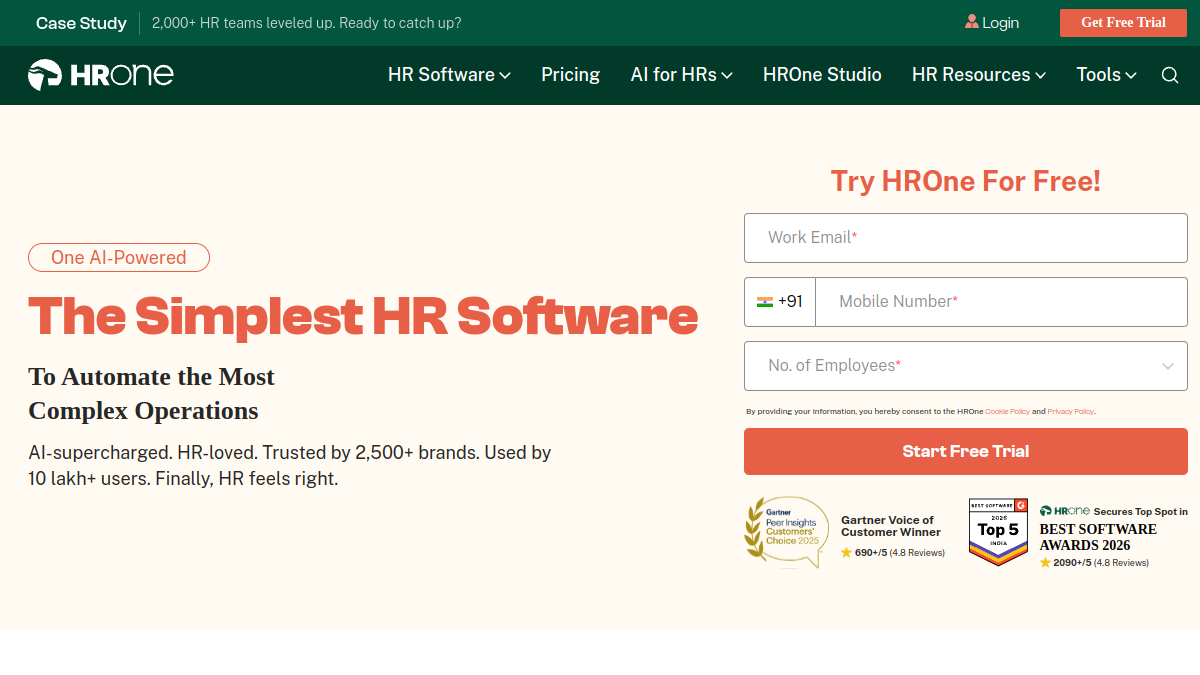
HROne serves mid-market companies across manufacturing, retail, and services. Its strength is location-based compliance. PT and LWF rules apply by each employee’s work location, not by head office. That matters when you run 10 branches across states with different rules.
Pay groups handle arrears, variable pay, and shift differences. A pre-payroll check flags errors before salaries go out.
Why it made our list: It holds the highest G2 score on this whole list, 4.8 from over 2,000 reviews. Its real strength is applying the right PT and LWF rule based on where each employee works, not where your head office sits.
Best for: Companies with 300 to 2,000 employees spread across multiple states.
Pricing: From about Rs. 85 per employee per month, with billing starting only after go-live. Details on the HROne pricing page.
G2 rating: 4.8 out of 5 from over 2,000 reviews (verified on G2). The highest G2 score on this list.
Pros:
- Clean state-wise PT and LWF automation
- Error detection before payout, not after
- Transparent published pricing with go-live billing
Cons:
- Not built for 5,000+ employee scale or global payroll
- The interface is practical rather than polished
7. Pocket HRMS
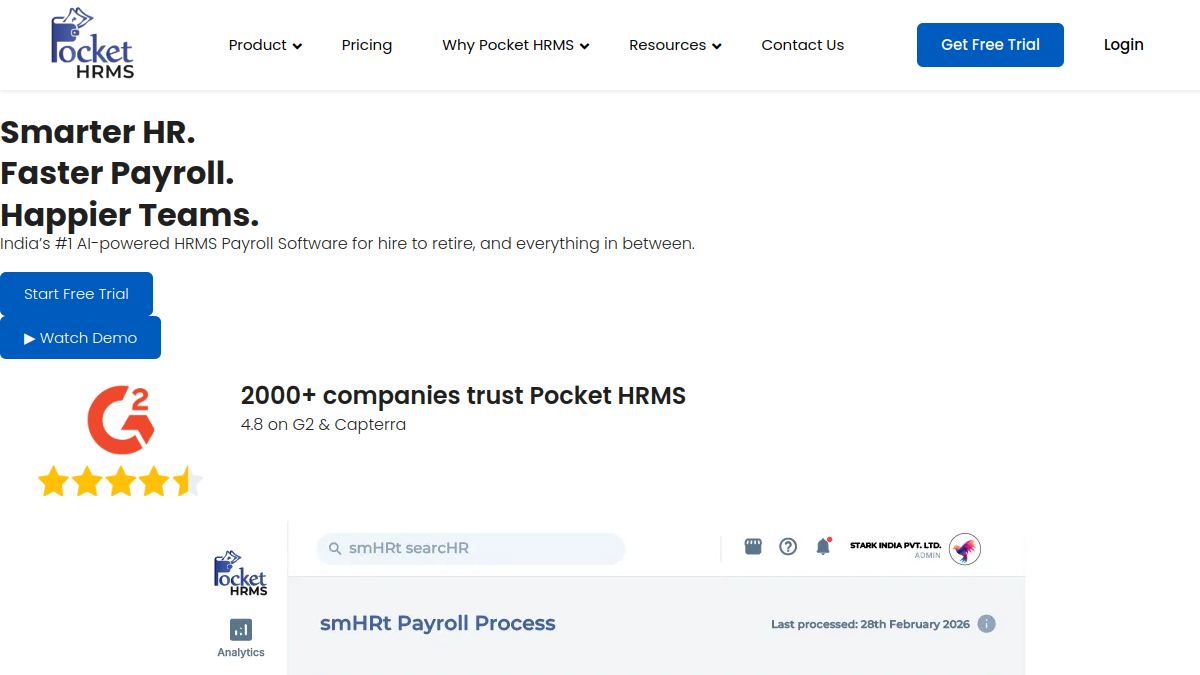
Pocket HRMS is a cloud HRMS aimed at Indian SMBs. It bundles payroll with attendance, leave, and employee self-service at SMB-friendly prices. Statutory basics are covered, including PF, ESI, PT, and TDS, with cloud-based rule updates. It also offers an HR chatbot called smHRty for employee queries.
It is a fit when you want one simple system for HR and payroll without enterprise pricing.
Why it made our list: It is one of the cheapest ways in India to get HR and payroll in one system, at Rs. 2,995 a month for 50 people. For a small business with no IT team, that price and simplicity earn it a place here.
Best for: SMBs with 25 to 500 employees looking for an affordable all-in-one system.
Pricing: From Rs. 2,995 per month for up to 50 employees, then about Rs. 60 per extra employee. Details on the Pocket HRMS pricing page.
User rating: 89% user satisfaction across 14+ reviews on independent aggregators such as Research.com and SelectHub. G2 hosts the product but active review volume there is low; check the G2 listing before quoting a single star figure.
Pros:
- Budget-friendly entry point for full HRMS plus payroll
- Simple setup aimed at teams without an IT department
Cons:
- Less depth for complex multi-entity or factory payroll
- Smaller ecosystem than the larger platforms on this list
8. Paybooks
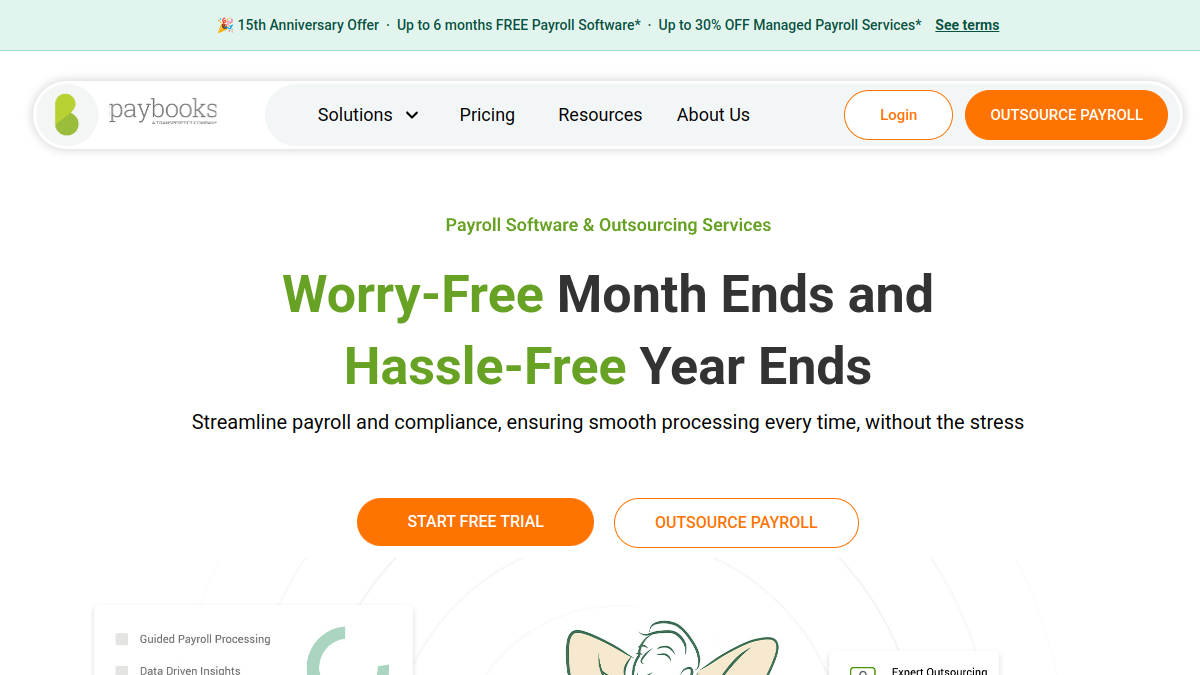
Paybooks is a payroll-focused product from Bengaluru, now part of the TransPerfect group. It offers two paths. You can run payroll yourself on its software, or hand the whole process to its managed payroll team. The managed option suits small companies with no payroll expert in-house.
Statutory coverage includes PF, ESI, PT, TDS, and Form 16, and it integrates with QuickBooks Online and Zoho Books for accounting.
Why it made our list: It is here for teams that do not want to run payroll at all. Its managed service does the whole job for you, and the company has focused only on payroll since 2012. No other SMB tool on this list offers that.
Best for: SMBs with 20 to 500 employees, especially those who want payroll outsourced.
Pricing: Paybooks does not publish a fixed price list. As of 2026 it runs a 15th Anniversary offer with up to 6 months of free payroll software and up to 30% off managed payroll services. Get a live quote on the Paybooks website.
User rating: 26 verified reviews on G2 (rating varies by review batch); 4.7 out of 5 from 47 reviews on SpotSaaS. Capterra lists positive reviews from Paybooks’ 3,000+ client base. Founded 2012, acquired by TransPerfect in 2024.
Pros:
- Choice between self-run software and fully managed payroll
- Payroll-first focus rather than a broad HR suite
Cons:
- HR features beyond payroll are limited
- Less known than bigger brands, so check references for your industry
9. PeopleStrong
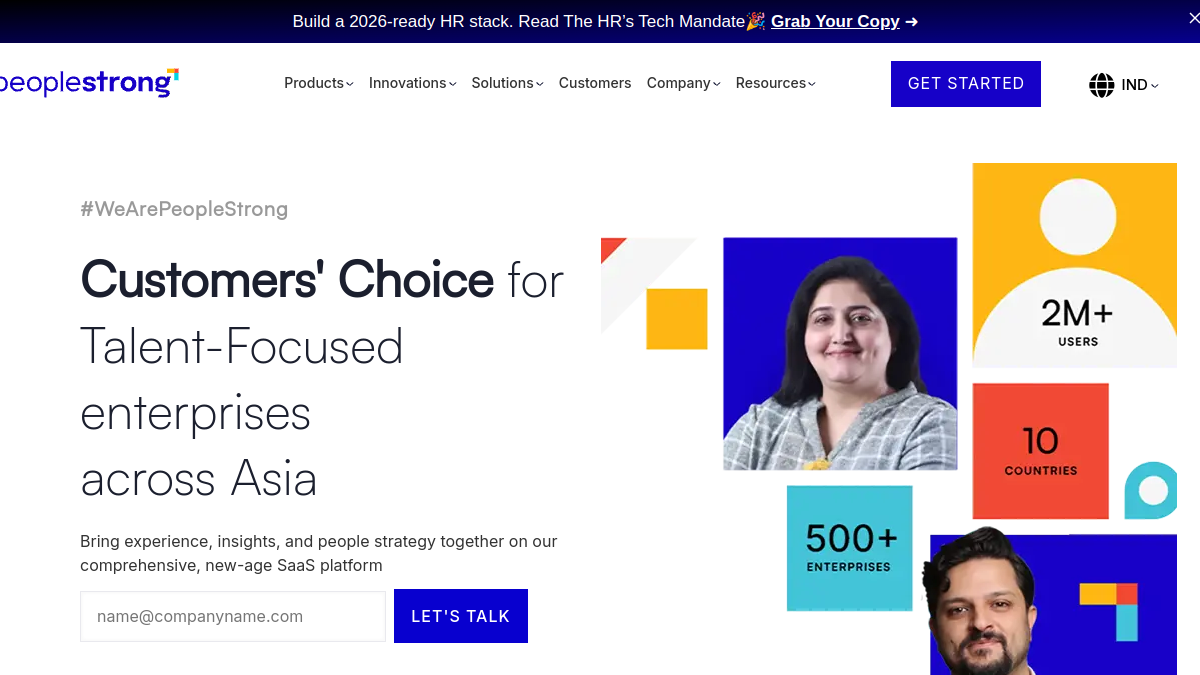
PeopleStrong is an Indian enterprise platform with payroll built into its Alt HCM suite. Attendance, leave, core HR, and payroll share one record, so nothing moves by export. It carries two decades of Indian payroll experience and supports the new Code on Wages definitions.
The Jinie chatbot answers routine employee questions about payslips and tax, which cuts repeat queries to HR.
Why it made our list: It has run enterprise payroll in India for about two decades, and users rate it 4.7 on Gartner. Big companies pick it because payroll, HR, and attendance live in one record, so nothing moves by export.
Best for: Large Indian enterprises with 1,000 to 50,000+ employees.
Pricing: Custom enterprise quote. Start on the PeopleStrong website.
User rating: 4.7 out of 5 from 600+ reviews on Gartner Peer Insights in the 1,000+ employee HCM market (verified).
Pros:
- Deep India-native compliance backed by long payroll history
- One record across recruitment, performance, and payroll
- Handles multi-entity and multi-country group structures
Cons:
- Too heavy for teams under 500 employees
- Full rollouts commonly take 8 to 16 weeks
10. Darwinbox
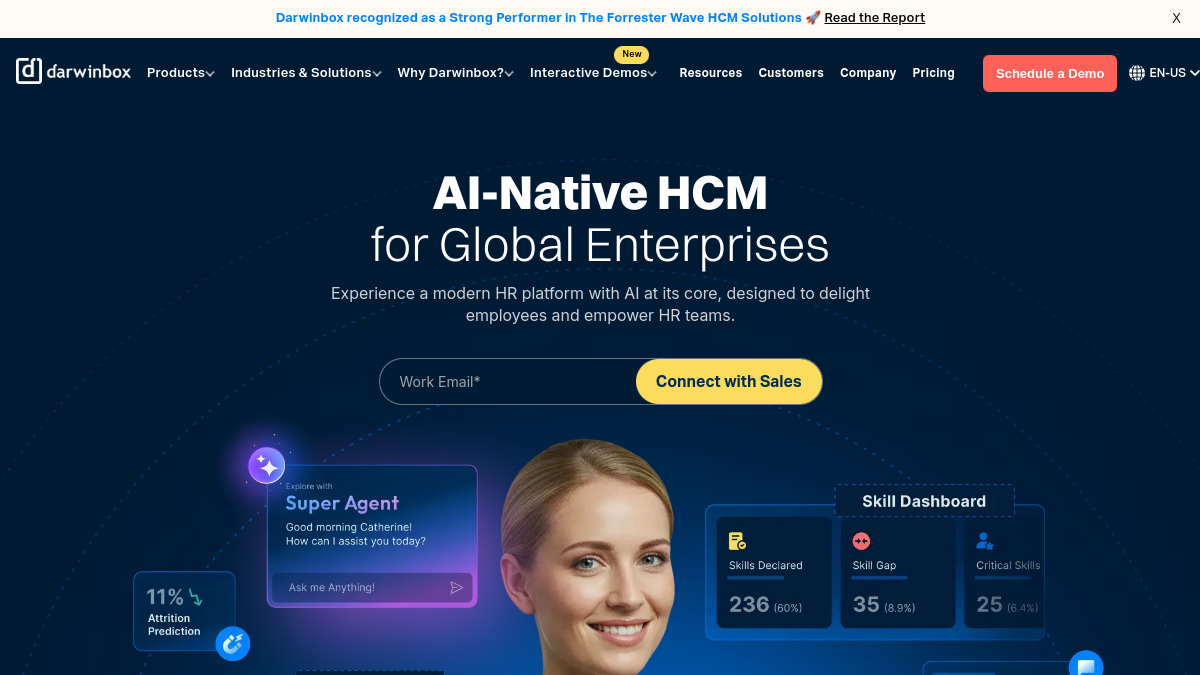
Darwinbox is an enterprise HCM built in Hyderabad. Its payroll sits inside the same record as core HR, attendance, and talent. That suits Indian groups running several companies under different PANs, because one platform handles all entities with consolidated reports.
The statutory engine covers PF, ESI, TDS, state-wise PT, LWF, gratuity, bonus, and Code on Wages readiness. Anomaly checks flag odd numbers before each run.
Why it made our list: It is the strongest India-built choice for groups running many companies under different PANs. One platform pays everyone and gives the head office one combined report. Very few tools do this well.
Best for: Enterprises with 1,000 to 50,000+ employees and multiple legal entities.
Pricing: Custom enterprise quote. Start on the Darwinbox website.
User rating: 4.4 out of 5 from 192 reviews on G2, and 4.7 out of 5 from 600 reviews on Gartner Peer Insights (verified).
Pros:
- Multi-entity payroll on one platform cuts vendor sprawl
- Strong analyst recognition helps procurement sign-off
- India-first compliance with managed updates
Cons:
- Too much system for teams under 200 employees
- Implementations typically run 6 to 12 weeks
11. ADP India
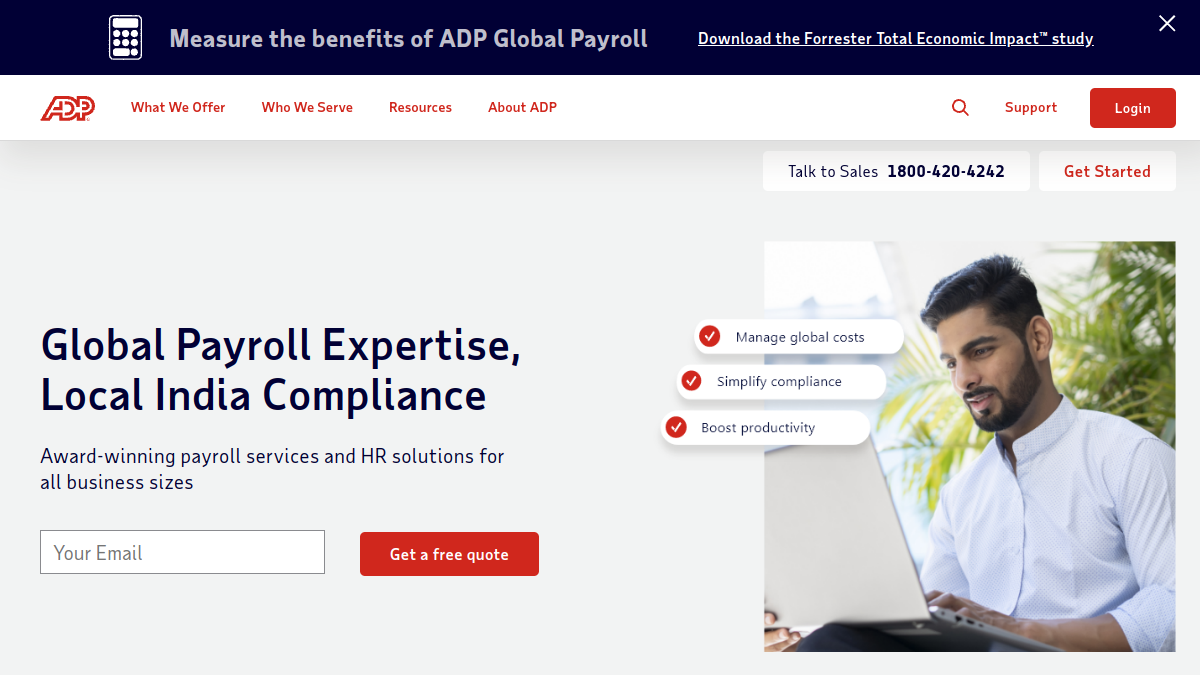
ADP is a global payroll giant with a dedicated India business. Its stand-out offer is the bureau model. ADP’s team files your PF ECR, ESI challans, and Form 24Q, and even handles government correspondence for you. Your finance team reviews instead of executes.
MNCs also value one vendor across countries. The India entity runs on the same relationship as the US or European entities.
Why it made our list: It removes more work than any other tool here. ADP’s team files your returns and even replies to government notices for you. For an MNC that wants one payroll vendor worldwide, that is worth the price.
Best for: MNC subsidiaries and large Indian firms with 300+ employees that prefer managed payroll.
Pricing: Custom quote, per employee or fixed retainer. Start on the ADP India website.
G2 rating: 4.2 out of 5 from over 3,900 reviews for ADP Workforce Now (verified on G2).
Pros:
- Filings and government queries handled for you
- One global vendor simplifies MNC procurement
- Strong security certifications and audit depth
Cons:
- Self-service screens feel older than India-native SaaS tools
- Setup takes longer than software-only options
12. Oracle Fusion HCM
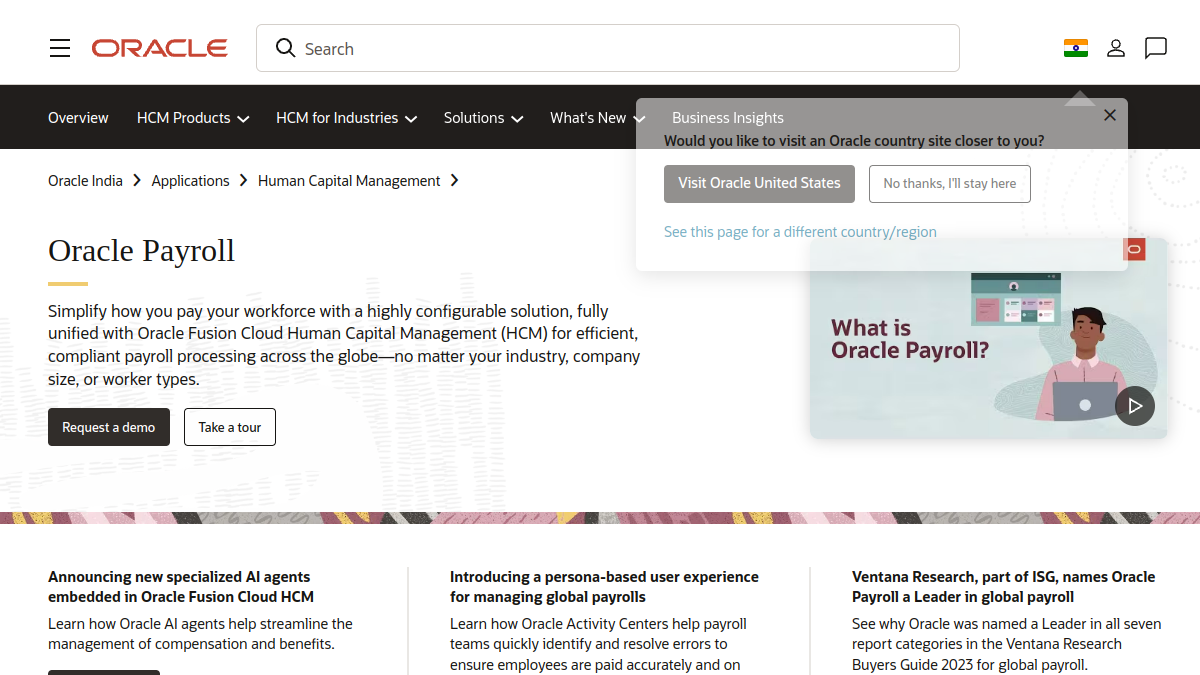
Oracle Fusion Cloud HCM includes an India payroll module with full statutory coverage. Large enterprises pick it when the global head office already runs Oracle HCM or ERP, and the India entity must follow the same standard.
The strongest feature is the single global record. An employee moving from India to the US keeps one profile across payroll, benefits, and talent. AI checks flag payroll anomalies before salaries go out.
Why it made our list: It is here for one specific buyer: a company whose global head office already runs Oracle. The India office then gets local payroll on the same worldwide system. For anyone else, it is too heavy.
Best for: MNCs and enterprises with 1,000+ employees in India under a global Oracle setup.
Pricing: Enterprise custom pricing through Oracle or partners. Start on the Oracle HCM page.
User rating: 3.8 out of 5 from 86 reviews on G2 for Oracle Global Human Resources Cloud, the lowest on this list. Enterprise reviewers on Gartner Peer Insights rate the full suite higher at 4.8 in the 1,000+ employee market (verified).
Pros:
- One vendor for HCM, payroll, and ERP worldwide
- Strong enterprise security and audit controls
Cons:
- Implementations often run 6 to 12 months
- G2 users cite complexity and support as the main pain points
- Costly and heavy for anything below large enterprise scale
Which Payroll Software Fits Your Company Size and Industry?
Match the tool to your stage first, then to your industry. Here is the size view:
| Company size | Pick these first | Why |
|---|---|---|
| Under 25 employees | GreytHR free, Zoho Payroll | Zero or lowest cost with real filings |
| 25 to 250 | factoHR, GreytHR, Pocket HRMS | Compliance depth plus attendance link |
| 250 to 2,000 | factoHR, Keka HR, HROne | Multi-state depth and modern workflows |
| 1,000+ | PeopleStrong, Darwinbox, ADP, Oracle | Multi-entity scale and managed options |
And the industry view:
| Industry | Top pick | Also consider |
|---|---|---|
| Manufacturing | factoHR | HROne, Darwinbox |
| IT and tech | Keka HR | factoHR, Zoho, RazorpayX |
| Retail and e-commerce | factoHR | HROne, GreytHR |
| Professional services | Keka HR | Zoho, Paybooks |
| Healthcare | factoHR | PeopleStrong, Darwinbox |
| Startups (any sector) | RazorpayX | Zoho, GreytHR free |
Two guides will help you go deeper. Read our HRMS software comparison if you need full HR, not just payroll. Read how to choose payroll software step by step for a full evaluation checklist.
How Much Does Payroll Software Cost in India in 2026?
Entry-level payroll software in India starts near Rs. 40 to Rs. 100 per employee per month. Mid-market platforms run from about Rs. 85 per employee (HROne) to Rs. 9,999 per month base (Keka). Enterprise tools use custom quotes. GreytHR’s free plan covers teams up to 25 employees at no cost.
Watch for costs beyond the sticker price:
- GST. Add 18% to every listed price.
- Implementation fees. Data migration and setup are often billed separately.
- Add-on modules. Attendance, performance, or recruitment often cost extra.
- Minimum billing blocks. Some tools bill for 100 seats even if you have 30 people.
- Support tiers. Priority support sometimes sits in a higher plan.
Compare total cost over three years, not the monthly rate alone. Before you compare vendors, know your real salary outgo. Our free CTC calculator breaks any CTC into monthly take-home, PF, and tax.
Final Verdict: Which Payroll Software Should You Buy?
For most Indian companies in 2026, factoHR is the strongest first shortlist. It joins multi-state compliance, flexible salary structures, and attendance-driven payroll in one platform. It grows with you from 50 employees to several thousand.
Lean startups should start with RazorpayX or Zoho Payroll. Teams under 25 should try GreytHR free. Budget-focused SMBs should compare Pocket HRMS and Paybooks. Enterprises above 1,000 employees should demo PeopleStrong, Darwinbox, ADP, or Oracle.
One reminder in closing. Test every tool with your own data before you decide. Bring your own attendance data and one messy month of payroll to the demo. Book a free demo and watch PF, ESI, TDS, and Telangana PT run end to end before you decide.
FAQs About Payroll Software in India
Is cloud payroll software safe for Indian companies?
Yes, when the vendor uses encryption, role-based access, and audited data centres. Cloud payroll keeps a full audit trail and limits who sees salary data. That makes it safer than shared spreadsheets. Ask for ISO 27001 and SOC 2 certificates before signing.
How long does it take to move from Excel to payroll software?
Most SMBs finish in 2 to 4 weeks. Week one covers data cleanup and salary mapping. Week two runs payroll in parallel with Excel. Weeks three and four fix gaps and go live. Dirty data such as missing PAN, UAN, or bank details causes most delays.
What is the cheapest payroll software for small businesses in India?
GreytHR is free for up to 25 employees, including statutory filings. Zoho Payroll follows at about Rs. 40 per employee per month, with a free plan for up to 10 employees. Pocket HRMS works out near Rs. 60 per employee, and RazorpayX starts at Rs. 100 per employee per month.
Which payroll software is best for 50 to 100 employees?
factoHR, GreytHR, and Pocket HRMS fit this range best on value. Pick factoHR for shift-based or distributed teams. Pick GreytHR when price is the deciding factor. Keka HR fits too, but note its base fee covers 100 seats, so cost per head only makes sense near the top of this range.
Does payroll software handle PF, ESI, TDS, and PT automatically?
Yes. Modern tools calculate all four every month and apply the right PT slab by employee location. The better tools also push rule updates on their own after government notifications, so you never edit slabs by hand.
How do I switch from one payroll software to another?
Plan four weeks. Export employee data, salary structures, and year-to-date figures first. Then set up the new system and run one parallel payroll. Fix differences, then go live. Switch just before the new financial year to keep Form 16 clean.
What is the difference between payroll software and HR payroll software?
Payroll software runs salaries and statutory filings only. HR payroll software adds attendance, leave, hiring, and performance on the same platform. Integrated tools reduce errors because data flows into payroll without exports. Most growing companies benefit from the integrated option.
Is GreytHR really free for small businesses?
Yes. The free plan covers up to 25 employees and includes payroll processing plus PF, ESI, PT, and TDS filings. Paid plans start at Rs. 3,495 per month for up to 50 employees. It is the most generous free tier among mainstream Indian payroll tools.
Follow HRSoftware Hyderabad on LinkedIn
Get weekly Telangana HR compliance updates, hiring trends, and SMB HR tips.
→