People are the heart of every business. It does not matter if you run a 10-person startup or a 10,000-person company. How well you manage your people decides how far your business goes.
That is exactly why the objectives of Human Resource Management matter so much. Without clear HRM objectives, even the best teams lose direction.
In this complete guide, you will learn what the objectives of human resource management are, the four main categories they fall into, and how to put them into practice to drive real business results.
- HRM objectives are the strategic goals that guide how an organization manages, develops, and retains its people. They connect HR activity directly to business outcomes.
- The four categories of HRM objectives are organizational (business growth), societal (legal and ethical compliance), functional (HR department efficiency), and personal (employee satisfaction and development).
- The 10 key objectives cover everything from achieving organizational goals and building culture to recruiting talent, managing performance, ensuring legal compliance, and driving DEI initiatives.
- Modern HRM objectives for 2026 include AI adoption in HR, remote workforce management, employee mental health programs, and data-driven decision making.
- Setting effective HRM objectives requires starting with business goals, identifying HR gaps, making every objective measurable, getting leadership buy-in, and reviewing quarterly.
Why HRM Objectives Are the Foundation of Business Success
The objectives of human resource management are not a checklist for the HR department. They are the strategic foundation of a healthy, high-performing business.
When HRM objectives are clearly defined, connected to business strategy, and reviewed and updated regularly, everything else falls into place. Hiring improves. People stay longer. Teams perform at a higher level. Legal risks decrease. Culture gets stronger. And the business grows faster.
The companies that treat human resource management as a strategic priority do not just have happier employees. They consistently and measurably outperform the companies that do not.
Start with clear human resource objectives. Build your people strategy around them. Revisit them every time the business changes direction. If you are looking for an HR software built for Hyderabad businesses that helps you execute on all of these objectives from one platform, explore the full feature set here.
What is Human Resource Management (HRM)?
Human Resource Management, or HRM, is the practice of managing people inside an organization. It covers the full employee lifecycle, from hiring and onboarding to development, performance management, and offboarding.
In plain terms, HRM is how a business takes care of its most valuable asset: its people.
Every business needs HRM. A five-person company still needs to hire, pay, and manage its staff. A global company of 50,000 needs the same things at a much larger scale. The core principles of human resource management stay consistent regardless of size or industry.
HRM has changed dramatically over the years. It used to be mostly paperwork and payroll administration. Today it is a strategic business function. HR professionals now sit at the leadership table. They shape company culture, drive workforce performance, support employee wellbeing, and build workplaces where people genuinely want to stay.
And none of that is possible without clearly defined HRM objectives guiding every decision.
Why Do the Objectives of HRM Matter?
HRM without clear objectives is like driving without a map. You might move, but you will not know where you are going or how to get there efficiently.
Here is why the objectives of human resource management matter in real numbers:
- Companies with strong HR practices are 3.5x more likely to outperform their competitors, according to McKinsey.
- Businesses that invest in employee engagement see 21% higher profitability, according to Gallup.
- Poor people management costs US businesses over $1 trillion per year in voluntary turnover, according to Gallup.
When companies ignore their HRM objectives, the effects show up fast. Hiring becomes reactive instead of strategic. Employees feel disconnected and undervalued. Legal risks build up quietly. Talented people start leaving. Productivity drops.
And the cost of fixing all of that is always higher than preventing it in the first place.
Clear human resource objectives give HR teams direction and give the business a people strategy that actually works. They connect HR activity to business outcomes. They create accountability. And they build a workplace where both the company and its people grow together. Tools like HR software built for Hyderabad businesses help HR teams execute on those objectives with far less manual effort.
4 Main Categories of HRM Objectives
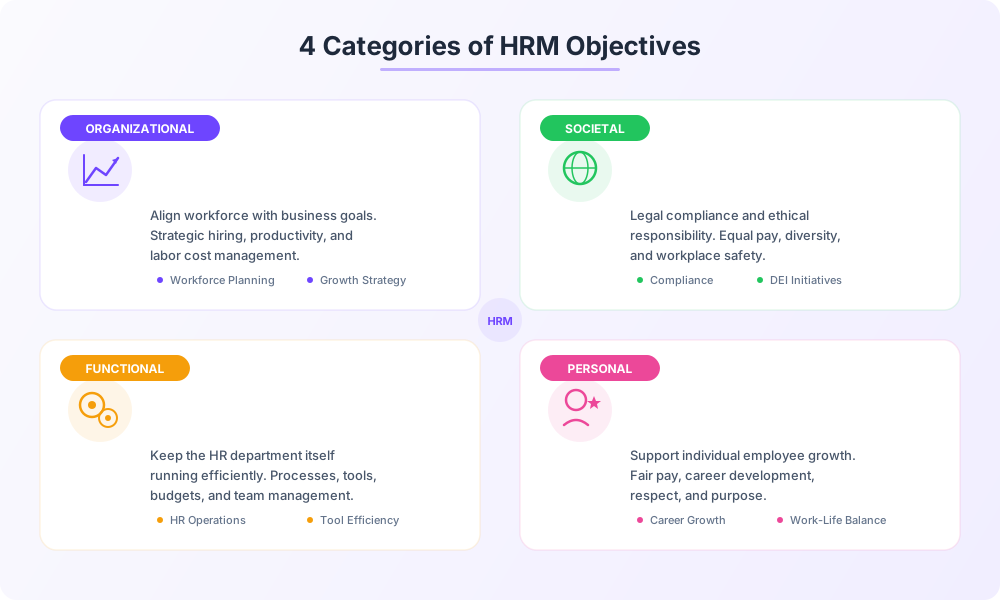
All HRM objectives fall into four broad categories. Understanding these categories helps HR leaders organize their priorities, communicate strategy clearly to leadership, and make sure no critical area gets overlooked.
Organizational Objectives
These focus on helping the company achieve its targets. Workforce planning, strategic hiring, productivity management, and labor cost control all fall here. The goal is making sure HR actively contributes to business growth, not just business administration.
Societal Objectives
These are about doing the right thing, legally and ethically. Following employment laws, promoting equal pay and opportunity, supporting diversity and inclusion, ensuring workplace safety, and contributing positively to the community. Companies that neglect societal HRM objectives face fines, lawsuits, and long-term reputational damage. India-specific obligations like Telangana professional tax fall squarely in this category.
Functional Objectives
These focus on keeping the HR department itself running efficiently. HR must manage its own processes, tools, budgets, and team effectively. A disorganized HR function creates problems that ripple through the entire organization. Using a dedicated HRMS platform helps HR teams stay organized and move faster.
Personal Objectives
These support each employee as an individual. People bring personal goals to work. They want fair pay, career growth, respect, and a sense of purpose. When HR helps employees meet their personal objectives, those employees give more back to the company. Personal and organizational goals align naturally when HR gets this right.
10 Key Objectives of Human Resource Management
Here are the 10 most important human resource objectives every organization should have in place. Each one includes what it means, why it matters to business performance, and a real-world example.
1. Achieving Organizational Goals
What it means: The most fundamental HRM objective is helping the business achieve its goals. Every HR action, from hiring decisions to training programs to performance reviews, should connect back to what the company is trying to accomplish strategically.
Why it matters: Without this alignment, HR stays a support function instead of becoming a growth driver. When human resource objectives are tied directly to business strategy, organizations move faster, waste less, and get more out of every person on the team.
2. Building a Positive Work Culture
What it means: Organizational culture is the personality of a workplace. It is how people treat each other, what behaviors get rewarded, and what it actually feels like to show up every day. Shaping a positive work culture is a central objective of HRM.
Why it matters: Culture drives everything downstream. A positive culture improves productivity, reduces conflict, lowers employee turnover, and makes it easier to attract strong talent. A toxic culture spreads fast and is expensive to fix.
3. Team Integration and Collaboration
What it means: Effective HRM ensures teams across the organization work well together. This includes building communication systems, resolving workplace conflict, managing team diversity, and breaking down departmental silos.
Why it matters: A company is only as strong as how well its people work together. When cross-functional collaboration works, projects move faster, ideas improve, and employees feel connected to the organization’s bigger mission.
4. Recruiting and Retaining Top Talent
One of the most visible objectives of HRM is talent acquisition and retention. Recruitment means attracting candidates who fit the role and the culture. Retention means making sure great employees choose to stay.
Why it matters: Replacing an employee can cost 50% to 200% of their annual salary depending on the role. Strong retention protects organizational knowledge, reduces recruitment costs, and keeps teams stable and high-performing.
5. Training and Employee Development
What it means: HR is responsible for making sure employees have the skills they need today and the capabilities they will need tomorrow. This covers new hire onboarding, technical skills training, leadership development, and creating visible paths for career advancement.
Why it matters: The business environment changes fast. Skills relevant three years ago can already be outdated. Organizations that invest in continuous learning retain better people and stay more competitive. A dedicated employee onboarding system makes this process faster, more consistent, and measurable from day one.
6. Employee Motivation and Engagement
What it means: Keeping employees engaged and motivated is one of the most important ongoing HRM objectives. It means creating an environment where people feel genuinely valued, heard, and connected to the company’s mission.
Why it matters: Engaged employees work harder, stay longer, and bring more energy to their roles. Disengaged employees do the bare minimum and drag team morale down. The difference shows up directly in business results.
7. Workforce Empowerment
What it means: Empowerment means giving employees the tools, information, and authority to handle their own work without constantly relying on HR for basic tasks. This is where an Employee Self-Service portal makes a real difference. Employees access pay stubs, submit leave requests, and update their own records without HR involvement, freeing up HR to focus on strategic work.
Why it matters: Empowered employees feel trusted and capable. They solve problems independently and contribute more proactively. Empowerment also frees HR from low-value admin.
8. Performance Management
HR builds and maintains the systems that help managers and employees set meaningful goals, track progress, exchange regular feedback, and evaluate performance consistently. A performance management system makes this process structured, fair, and scalable across the whole organization.
Why it matters: Without clear performance systems, high performers feel unrecognized and low performers go unchecked. Good performance management drives a culture of continuous improvement.
9. Ensuring Legal Compliance and Data Security
HR is responsible for keeping the company compliant with employment laws, payroll regulations, workplace safety standards, and data privacy requirements. This covers anti-discrimination policies, fair labor practices, and regulatory reporting. For Hyderabad businesses, this includes Telangana minimum wage compliance and professional tax obligations. The Compliance Hub is a useful resource for staying current on all statutory requirements.
Why it matters: A single compliance failure can result in significant fines, costly lawsuits, and lasting reputational damage. HR is the organization’s first line of defense against legal and regulatory risk.
10. Diversity, Equity, and Inclusion (DEI)
What it means: DEI is now a standalone objective of human resource management. It means actively building a workforce that reflects diverse backgrounds, experiences, and perspectives. Equity means ensuring everyone has fair access to opportunities. Inclusion means building a culture where every person feels they belong and can contribute fully. According to McKinsey research, companies in the top quartile for ethnic and cultural diversity are 36% more likely to achieve above-average profitability.
Modern HRM Objectives for 2026 and Beyond
Human resource management is not static. The workplace keeps changing and HRM objectives must evolve with it. Here are four forces reshaping HR strategy right now.
AI and Automation in HR
Artificial intelligence is changing how HR teams hire, onboard, and manage people. Automated resume screening, AI-powered employee chatbots, and predictive analytics for turnover risk are now widely used. The key HRM objective here is not just adopting these tools but using them responsibly. See how Gallup’s State of the Global Workplace report frames the challenge of keeping human engagement at the center of tech-driven HR.
Remote and Hybrid Workforce Management
Managing people you rarely see in person requires different policies and tools. Attendance and time tracking software designed for remote and hybrid teams helps HR maintain visibility, fairness, and accountability across distributed workforces.
Employee Mental Health and Wellbeing
Burnout is one of the defining workforce challenges of this decade. HR teams are building structured mental health programs, training managers to recognize early signs of stress, and creating cultures where asking for support is normal. The WHO’s workplace mental health guidelines provide a solid framework for organizations building wellbeing programs.
Data-Driven HR Decision Making
The most effective HR teams today run on data. They track turnover trends, monitor engagement results, and use workforce analytics to catch problems early. Combining timesheets and project tracking with HR data gives leadership a full picture of workforce productivity and efficiency.
How to Set Effective HRM Objectives (Step-by-Step)
Understanding the objectives of HRM is one thing. Setting them correctly inside your organization is another. Here is a five-step framework that works.
- Start with business goals: Every HRM objective should serve at least one business priority. Talk to leadership before writing a single HR goal. Understand what the company needs to achieve this quarter and this year.
- Identify your HR gaps: Where is your people strategy falling short right now? High turnover? Slow hiring? Compliance risks? Get specific about the problems before setting the solutions.
- Make every objective measurable: Vague goals produce vague results. Instead of “improve employee engagement,” say “increase engagement survey scores from 62% to 75% by Q3.” Every objective needs a specific metric and deadline.
- Get leadership buy-in: HRM objectives without leadership support will not get the budget or attention they need. Present each objective clearly and connect it to a business outcome.
- Review and adjust regularly: A quarterly review cadence keeps your HRM objectives relevant as the business evolves. Regular reviews are what separate HR teams that drive results from those that just report on them.
Common Mistakes Companies Make with HRM Objectives
Even well-intentioned HR teams get this wrong. Here are four mistakes worth avoiding.
Mistake 1: Setting Objectives That Are Too Vague
“Improve employee engagement” is a wish, not an objective. Without a specific target and a deadline attached, nothing actually changes. Every HRM goal needs a concrete measure of success to drive real accountability.
Mistake 2: Disconnecting HR from Business Strategy
HR does not operate in a bubble. When human resource objectives are built without input from leadership, finance, or operations, they tend to be irrelevant to what the business actually needs. Always start by asking: what does the business need from its people this year?
Mistake 3: Setting and Forgetting
Many organizations set HRM objectives in January and revisit them in December. By then, priorities have shifted and the goals are outdated. Regular check-ins throughout the year are what turn good intentions into measurable results.
Mistake 4: Leaving Employees Out of the Process
HRM objectives should serve employees, not just the company. When employees have no voice in shaping their workplace, engagement drops and trust erodes. The best HR teams build structured feedback loops into every major decision they make.
Frequently Asked Questions (FAQs)
What are the main objectives of HRM?
The main objectives of human resource management are to attract and retain talent, develop employee skills, maintain a positive work culture, manage performance, ensure legal compliance, and align the workforce with organizational goals. These objectives work together to create a productive, engaged, and legally sound workplace.
What are the 4 types of HRM objectives?
The four types of HRM objectives are: organizational objectives (supporting business performance), societal objectives (meeting legal and ethical responsibilities), functional objectives (keeping HR itself running efficiently), and personal objectives (supporting each employee’s individual growth and satisfaction).
What is the primary goal of human resource management?
The primary goal of HRM is to maximize the contribution of people within an organization while supporting their wellbeing, development, and job satisfaction. In practical terms, it means making sure the right people are in the right roles with the right support to perform at their best.
How do HRM objectives help a business grow?
When HRM objectives are tied directly to business strategy, they ensure the company always has the talent, skills, culture, and compliance posture it needs to grow. Strong hiring, low voluntary turnover, high employee engagement, and legal compliance all contribute directly and measurably to business performance. Read the SHRM research on HR’s impact on business performance for detailed data on this relationship.
What is the difference between HRM objectives and HRM functions?
HRM functions are the specific activities HR carries out, such as recruiting, running payroll, delivering training, or managing benefits. HRM objectives are the outcomes those activities are designed to achieve. Functions are the “what HR does.” Objectives are the “why HR does it.”
Why is employee retention an HRM objective?
Employee retention is a core human resource objective because turnover is expensive, disruptive, and damaging to business performance. Replacing a single employee can cost 50% to 200% of their annual salary. Expense management tools and structured benefits programs both play a role in keeping employees satisfied and less likely to leave.